Robotics digital twins

Kaleb Coleman

Digital twins of robotic systems, from arms and humanoids to quadrotors

I am an M.S. AI Engineering (Robotics) student at ASU and a researcher in the RISE Lab. I build simulation digital twins of robotic systems, including UR5e arms, a Unitree G1 humanoid, quadrotors, and contact-rich assembly, in NVIDIA Isaac Sim, Isaac Lab, and MuJoCo. I came to robotics through data science and machine learning.

Demonstrated work

Digital twins across systems

A humanoid, contact-rich assembly, simulator tooling, a quadrotor, and a mobile robot, built and run in Isaac Sim, Isaac Lab, and MuJoCo. Everything here runs in simulation.

Same scripted commands at training iteration 0 (left) and 1499 (right), 16 simulated robots per side. Fallen robots are reset in place, and this clip is not footage of the 256-robot test.

Runs in simulation

Unitree G1 Humanoid Locomotion

A simulated Unitree G1 humanoid trained to walk in Isaac Lab on Newton/MuJoCo-Warp physics. In the published evaluation, 237 of 256 robots stayed up through a 24-second stand, walk, turn, and stop test with random pushes.

Isaac Lab 3.0Newton / MuJoCo-WarpPPO (rsl_rl)Unitree G1Python
Scope, limits, and credits
Runs in simulation
A walking policy and its scripted 256-robot evaluation, on flat ground in Isaac Lab.
In development
Fall recovery and the hand-over from getting up to walking.
Direction / planned
Any hardware run. Nothing here has been tried on a physical G1.

Simulation only, one policy from one training seed, with no repeats or confidence intervals. The task, rewards, and PPO are upstream Isaac Lab components, not a new algorithm of mine.

Credits: Built on Isaac Lab (NVIDIA and contributors), the Unitree G1 model by Unitree Robotics, rsl_rl, Newton, and MuJoCo-Warp.
The UR5e assembling the seven-part arch bridge in Isaac Sim 6.2, from the repository.

Runs in simulation

Contact-Rich Robotic Assembly Testbed

A UR5e with an RG2 gripper assembles structures from interlocking parts in Isaac Sim 6.2 while a joint-strength model decides, at every physics step, whether each connection holds. 21 of 29 catalogued structures complete, and every failure is traced to a cause.

Scope, limits, and credits
Runs in simulation
Structure builds and break tests in Isaac Sim 6.2, judged by simulator ground truth.
In development
More ways to grip parts, such as long-side grips and re-grasping, to remove the gripper limits found so far.
Direction / planned
Building the same structures on the real UR5e and comparing what fails; carrying the evaluation methods over to Jenga.

All results are simulation; no real-robot trials have been run. A completed run is one deterministic run, not evidence of robustness.

Credits: Builds on BrickSim by Haowei Wen, Ruixuan Liu, Weiyi Piao, Siyu Li, and Changliu Liu (Intelligent Control Lab, Carnegie Mellon University; MIT License). The connection and breakage physics, the native extension, and the simulator UI are theirs. The UR5e, gripper, and bench models are lab-supplied.

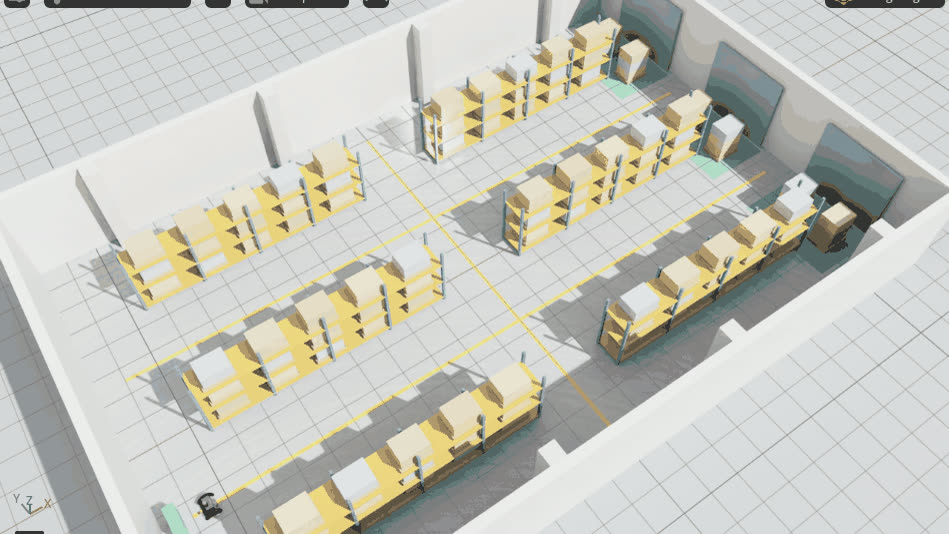
Overhead view of a simulated warehouse with rows of shelving racks holding boxes, yellow aisle lines, and a small wheeled robot at the start of an aisle
A warehouse and wheeled robot built by one Isaac MCP quick-start call (from the README).

Runs in simulation

Isaac MCP

An MCP server that lets AI agents build Isaac Sim scenes, load and drive robots, read cameras and LiDAR, and run Isaac Lab training and evaluation jobs.

Scope, limits, and credits
Runs in simulation
Documented builds are Isaac Sim 6.2.0.0 with Isaac Lab 3.0.0 and Isaac Sim 5.1.0.0 with Isaac Lab 2.3.2. Every demo is simulation only.
In development
Pre-release hardening and wider compatibility testing (Linux x86_64).
Direction / planned
Further robotics and learning workflows tracked on the project checklist.

Pre-release and simulation only; no hardware deployment.

Credits: Built on Aldrin Inbaraj's omni-kit-mcp and isaac-sim-mcp. The example robots and tasks belong to their owners, including NVIDIA's Isaac Lab and public Carter model.

Ongoing collaboration

Energy-Aware Prescribed-Time Quadrotor Control

Simulation research with John Lok on energy-aware prescribed-time quadrotor control. John led the controller development; I reproduced an archived MuJoCo NMPC baseline and am working on timing and validation.

Scope, limits, and credits
Runs in simulation
Controller comparisons run in MuJoCo; everything here is simulation.
In development
Timing and validation study; a paper draft.
Direction / planned
Hardware validation at the ASU Drone Studio. Nothing has flown yet.

No hardware tests, no completed timing target, and no new controller are claimed.

Credits: Joint work with John Lok, who led the controller development.

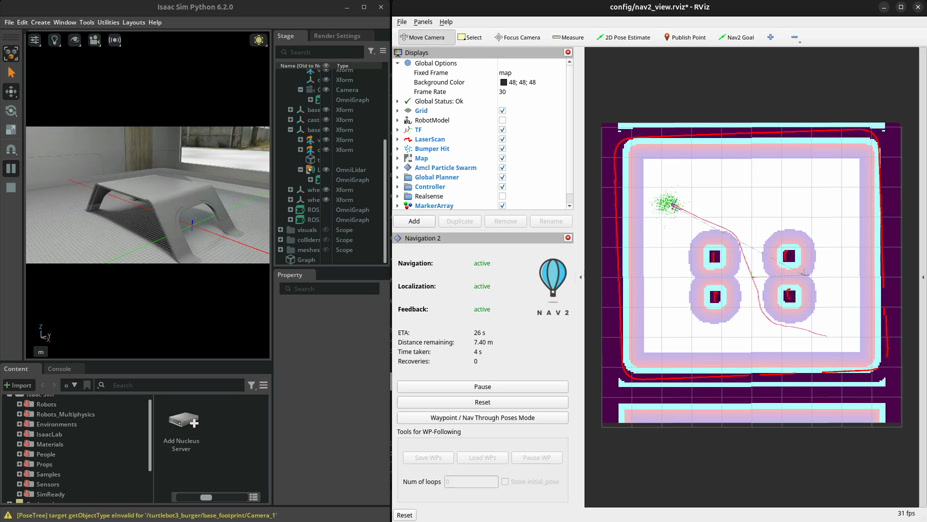
Isaac Sim on the left with a TurtleBot3 beside a table, and RViz on the right showing Nav2 active with a red planned path between the colored costmaps of four table legs
The simulated TurtleBot3 in Isaac Sim (left) navigating with Nav2 in RViz (right), with navigation and localization active and the planned path (red) weaving between the table-leg costmaps.

Lab coursework

TurtleBot3 ROS 2 Sensing and Nav2 in Isaac Sim

A simulated TurtleBot3 in Isaac Sim publishing LiDAR, camera, odometry, and TF over ROS 2, localizing with AMCL, and navigating to a goal with Nav2 around the legs of a table.

Scope, limits, and credits
Runs in simulation
Sensor topics in RViz, AMCL localization, and Nav2 navigation to a goal, all with the simulated robot.

Simulation only, from a course lab. Not shown: a physical TurtleBot, measured accuracy or repeated trials, or a mapping (SLAM) result. The public Nav2 goal examples in Isaac MCP use a Create 3, not this TurtleBot.

Credits: A course lab done with classmates. My part covered the Nav2 and AMCL setup, the Action Graphs, and the checks. The TurtleBot3 scene came from the course handout.

More robotics

Where this is heading

Research direction

Jenga-Playing Robot (Research Direction)

Where the contact-assembly work is heading: a robot that plays Jenga, possibly using model predictive control or reinforcement learning. Not built yet.

Scope, limits, and credits
Direction / planned
Exploring approaches. There is no Jenga robot and no proven controller yet.

Credits: Direction shared with Dr. Wenlong Zhang.

Data science background

Where I started

Machine learning and data engineering projects. More on the projects page.

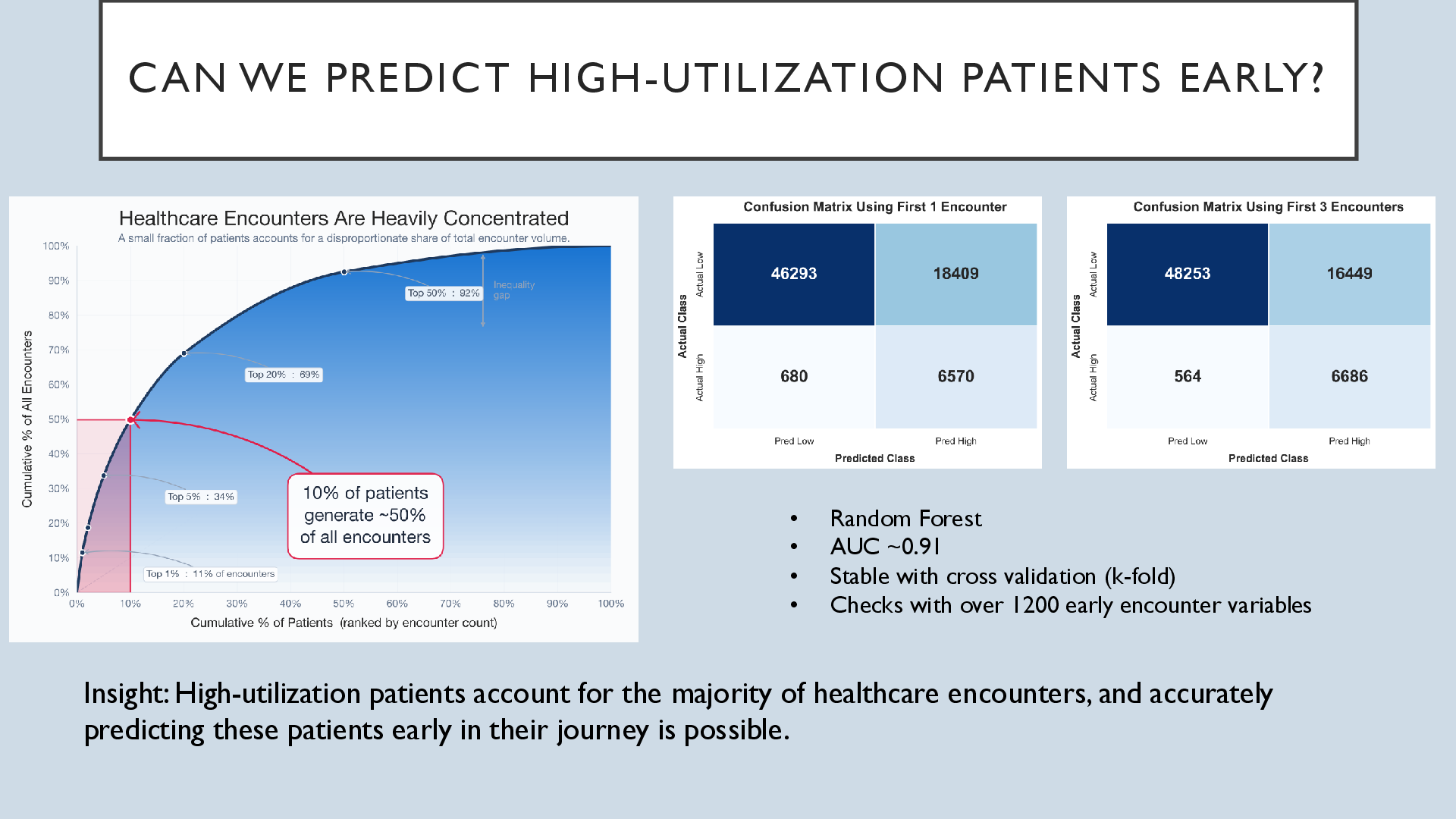
DataFest presentation slide visualizing concentrated healthcare encounters and early-risk model results

Team award

DataFest 2026: Early Signals of High Healthcare Utilization

Team project that won Best Visualization at NAU's ASA DataFest 2026: patient-journey modeling and utilization concentration analysis.

Scope, limits, and credits

Credits: Team project; the award is the team's.

Skills snapshot

Core technical strengths

Organized around the tools and workflows I use most often in project and research work.

Robotics / Simulation

Tools used to build and test digital twins of arms, a humanoid, and quadrotors.

NVIDIA Isaac Sim Isaac Lab MuJoCo Newton / MuJoCo-Warp UR5e / RG2 Unitree G1 USD and URDF assets Contact-rich assembly
Explore robotics projects

Languages

Core programming languages used across modeling, data pipelines, and application work.

Python R SQL C HTML/CSS

ML / AI

Modeling and experimentation tools for predictive analytics, deep learning, and generative work.

PyTorch scikit-learn XGBoost PyGAM Reinforcement learning (PPO) CNNs RNNs Autoencoders
See NBA win modeling

Data / Databases

Data collection, validation, storage, and reproducible analysis workflows.

pandas NumPy SQLite PostgreSQL SQLAlchemy API ingestion Schema validation ETL pipelines
See sports data engineering

Tools / Systems

Workflow, deployment, and engineering tools used to ship and maintain projects.

Flask Streamlit Git/GitHub Docker GitHub Actions Linux/CLI Selenium Slurm/HPC workflows

Cybersecurity

Enterprise security experience supporting a tribal government environment.

Endpoint security Network threat monitoring SaaS security Phishing defense Secure remote support
View professional experience